Project Description
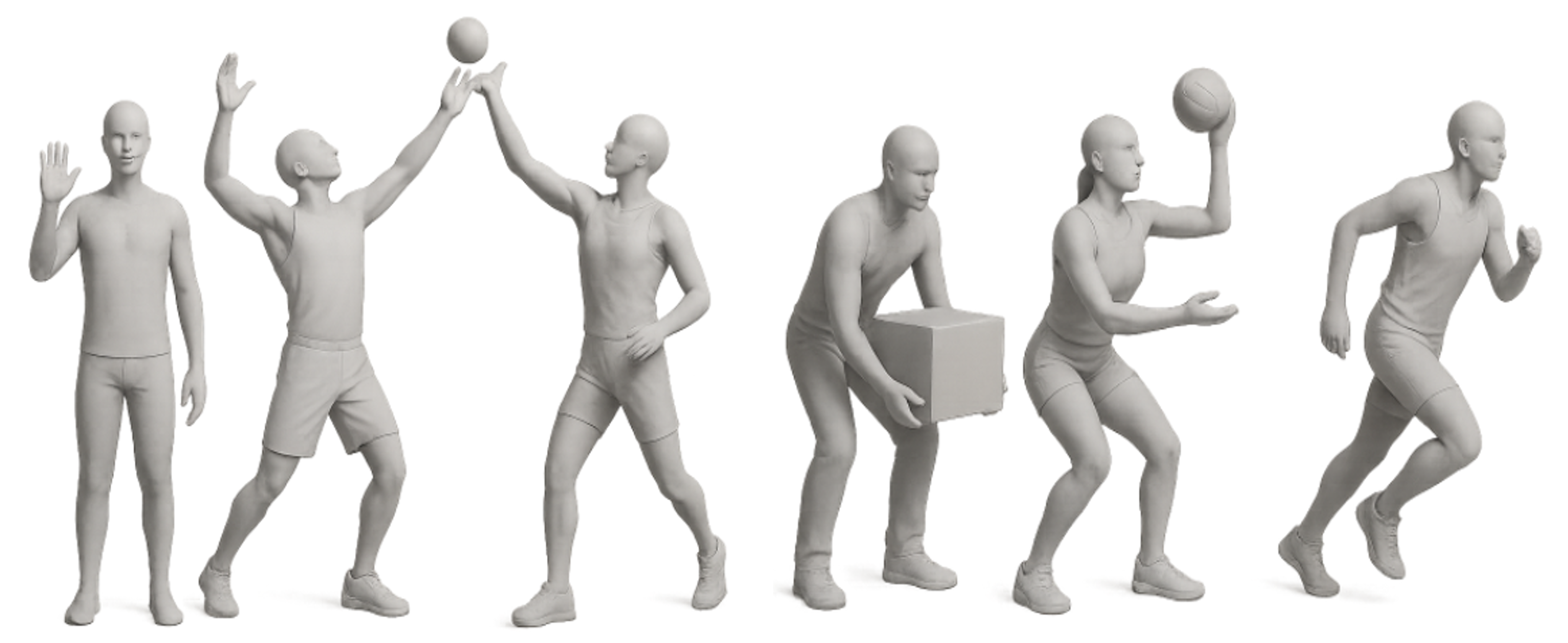
3D-Skeleton Human Action Recognition: This project proposed an unsupervised approach for human action recognition, conducted in multiple phases:
- Applied first- and second-order dynamics for 3D skeleton-based human action recognition using self-organizing neural networks.
- Designed and implemented an online action recognition system.
- Developed a self-organizing architecture with a growing grid network to enhance recognition performance.
- Built an online action recognition framework capable of handling unsegmented streams of action frames.
Key Contributions
- Designed and implemented a human action recognition system that, when paired with a Kinect sensor, receives and preprocesses action data, extracts 3D joint information, and recognizes performed actions.
- Validated the proposed pipeline on multiple publicly available datasets, including MSRAction3D, UTKinect, and Florence3DActions.
- Collaborated as a researcher on the What You Say Is What You Did (EU FET WYSIWYD), a multiple partner project.
- Contributing to the Ikaros: An infrastructure for system level modelling of the brain, a multiple partner project.
- Participating in the Thinking in Time: Cognition, Communication and Learning, a multiple partner project.
Tools & Technologies
- C++, Python
- Matplotlib (mpl_toolkits), Seaborn, Plotly, Visdom
- Container (Singularity, Docker)
- Cluster Computing, Parallel Computation
- Virtual Environment, Bash Environment
Code / Git
Research / Paper
Presentations
- 14th International Conference on Agents and Artificial Intelligence (ICAART 2022)
- 12th International Conference on Signal-Image Technology & Internet-Based Systems (SITIS 2016)
- 9th International Conference on Agents and Artificial Intelligence (ICAART 2017)
- 8th Annual International Conference on Biologically Inspired Cognitive Architectures (BICA 2017)
- International Conference on Neural Networks (ICNN 2018)